Top satisfaction as restorative justice helps victims find closure
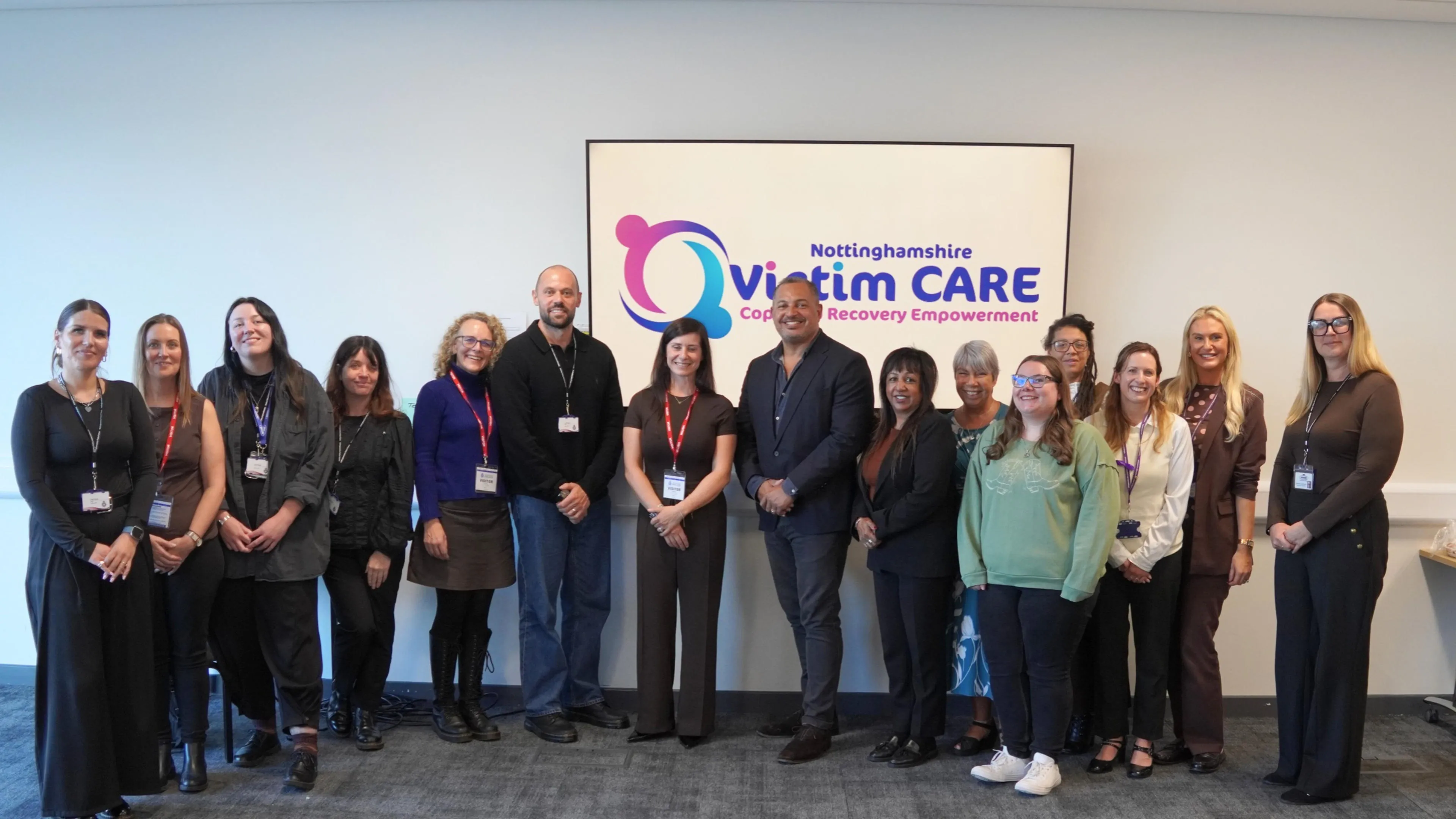
Victims of crime in Nottinghamshire are finding answers, rebuilding their confidence and gaining a greater sense of safety through a restorative justice service which has achieved a 100% satisfaction rate among those providing feedback.
The service, commissioned by the Office of the Police and Crime Commissioner (OPCC) for Nottinghamshire and delivered by specialist charity Remedi, gives victims the opportunity to communicate with those responsible for harming them, helping them understand what happened, have their voices heard and move forward with their lives.
As organisations across the country mark Restorative Justice Week (15–21 November), Nottinghamshire Police and Crime Commissioner Gary Godden is highlighting the positive impact of the service, which is helping victims recover while encouraging offenders to take responsibility for their actions.
Feedback from 115 people who have participated in restorative justice in Nottinghamshire reveals overwhelmingly positive experiences, with 100% of respondents satisfied with their involvement and 100% saying they would recommend restorative justice to others.
The findings also show that:
- 98% said restorative justice helped them cope or recover from the offence.
- 98% reported an improved sense of safety.
- 98% said it reduced feelings of fear.
- 97% reported improvements in their health or wellbeing.
- 97% said it improved their satisfaction with the criminal justice system.
Restorative justice is a voluntary process which gives people affected by crime the opportunity to communicate with those responsible, either directly or indirectly, in a safe and supported environment.
For some victims, this means asking questions they have been unable to get answers to. For others, it can mean explaining the lasting impact of an offence, receiving an apology or simply being able to move forward with a greater sense of closure.
Every case is carefully assessed and prepared by trained practitioners, with participation guided by the wishes and needs of those involved.
Nottinghamshire Police and Crime Commissioner Gary Godden said: “When someone becomes a victim of crime, the impact can stay with them long after the offence itself. They can be left with unanswered questions, feelings of fear or anger, and a sense that their voice hasn’t been heard.
“Restorative justice offers something that the traditional criminal justice process cannot always provide. It gives victims the opportunity to explain how they’ve been affected, ask the questions that matter to them and, where appropriate, hear directly from the person responsible.
“To see 100% satisfaction among those who have provided feedback, alongside 98% reporting improvements in their sense of safety and ability to cope or recover, is incredibly encouraging.
“But behind those percentages are real people whose lives have been affected by crime, and who have found something positive through what can be an incredibly difficult experience.
“This is also about accountability. Restorative justice is not a way of excusing criminal behaviour or allowing offenders to avoid responsibility. It’s about making sure they understand the human consequences of their actions and encouraging them to make better choices in the future.
“I’m proud that my office commissions this important service, and I want more people across Nottinghamshire to understand that restorative justice is an option available to them.
“Every victim’s experience is different, and restorative justice won’t be right for everyone. But for those who choose to take part, it can make a profound difference to their recovery, their confidence and their ability to move forward.”

The impact of the service can be seen through individual cases where victims and offenders have been supported to engage in meaningful conversations.
In one case, a representative from John Lewis was given the opportunity to meet a person who had stolen merchandise from one of its stores.
The offender had concealed a matcha tea set and left without paying, subsequently being referred for a Restorative Awareness Session as part of an out-of-court disposal.
During the session, Remedi practitioners challenged misconceptions about shoplifting, including the belief that theft from large retailers has little impact beyond the financial loss.
The offender was encouraged to consider the wider consequences for employees, customers and the business.
Following preparation, the offender met a John Lewis Revenue Protection Officer, providing a personal apology and an opportunity for the representative to ask questions about the offence.
For the representative, it was the first time they had been able to meet someone responsible for shoplifting face-to-face and explain the impact of their actions.
Reflecting on the experience, the representative said: “It was really helpful to meet them in person and have the opportunity to speak to them about their choices.”
The offender also acknowledged the wider impact of the offence, saying: “This helped me understand that shoplifting affects a lot more people than you would think.”
Another case involved a police officer who had been assaulted while responding to a welfare incident.
The individual responsible had received a conditional caution, including restorative and behaviour-change interventions designed to help them understand the offence, recognise personal triggers and develop strategies to avoid further harmful behaviour.
Through work with Remedi practitioners, the individual began to understand how their actions had affected the officer and expressed a desire to apologise.
Following careful preparation and with the agreement of both parties, a restorative meeting was arranged at a police station.
The officer was able to explain the impact of the assault, while the individual took responsibility for their behaviour and discussed the steps they were taking to make positive changes.
The meeting provided both participants with an opportunity to gain a greater understanding of what had happened and move forward.
Reflecting on the experience, the individual said: “Being able to speak directly to the police officer gave me a broader perspective of how my actions were not right.”
They also described feeling more confident about recognising difficult situations and making better decisions to prevent future conflict.
In a further case involving an assault on a police officer, restorative work was combined with a Changing Thinking Ending Violence intervention and support to address the circumstances contributing to the offending behaviour.
The individual was supported to recognise the harm caused, develop coping strategies and access additional wellbeing support.
A restorative conversation subsequently took place, allowing the officer to receive a personal apology and explain the impact of the incident.
The officer described the outcome as providing closure, adding: “We do not normally get to hear an apology, especially not a genuine one.”
These examples demonstrate how restorative justice can benefit both victims and those responsible for offences, creating opportunities for accountability, understanding and meaningful change.
Restorative Nottinghamshire Manager Jemma Gennings added: "At Restorative Nottinghamshire, we're here to listen and support you. Whether you've been affected by crime or have caused harm, restorative justice can provide an opportunity to communicate, ask questions, and move forward.
"You don't need to decide whether to take part straight away. Finding out more does not commit you to anything, and the choice to participate is always yours.
"We know that every person's experience is different. That's why our trained practitioners take the time to listen to what matters most to you, answer your questions, and support you in exploring whether restorative justice could be right for your situation.
"If you've been harmed by crime, you may have questions that only the person responsible can answer, or you may want them to understand the impact their actions have had on your life. Restorative justice can provide a safe and supported way for your voice to be heard.
"If you've caused harm, restorative justice offers an opportunity to take responsibility, reflect on the impact of your actions, and, where appropriate, make amends.
"Many of the people we support tell us that restorative justice has helped them gain answers, find closure, and move forward. Whatever your circumstances, we're here to guide you through your options at a pace that feels right for you."
Further information is available through Restorative Nottinghamshire at www.restorativenotts.org.uk, by emailing info@restorativenotts.org.uk or calling 0800 612 5717.